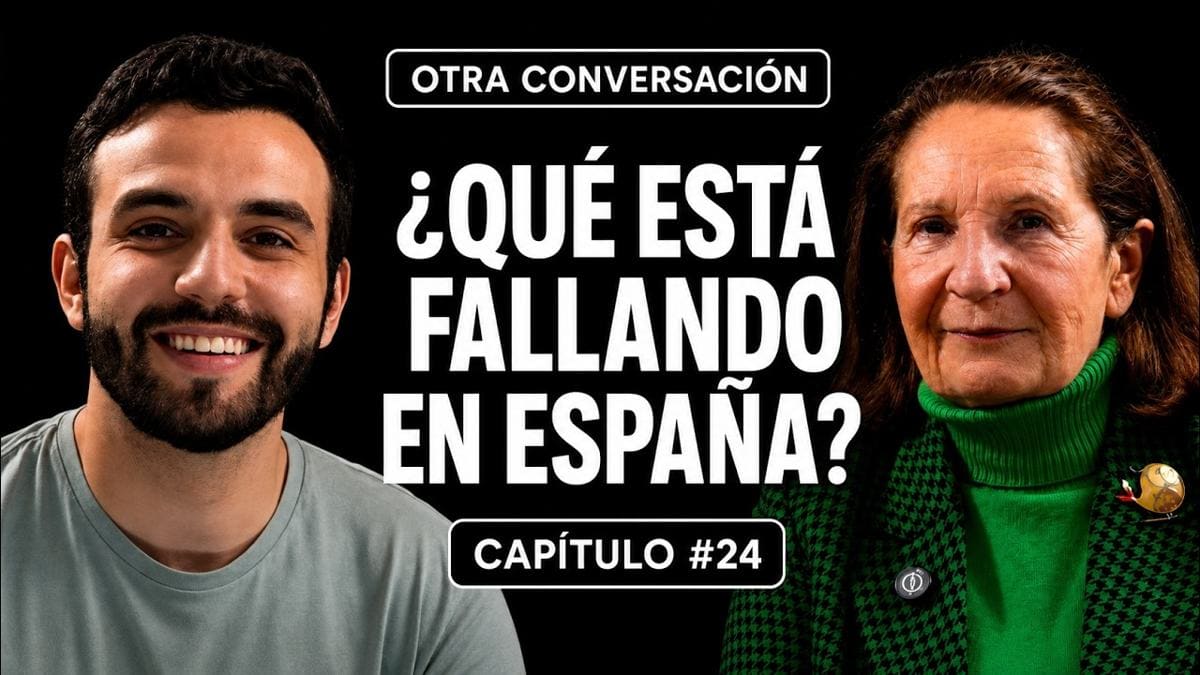
Otra conversación

An honest guide for brands considering podcast sponsorship: formats, real prices, the metrics that matter and the signs you are being sold smoke.
Podcast advertising has become fashionable, and with the fashion came the smoke. This guide is written from the other side: by someone who sells these slots and would rather explain how they work than close a sale that later disappoints.
Why the format works (when it works)
A feed ad competes for three seconds of attention with the thumb already moving. A read inside an episode reaches someone who chose to listen for an hour, almost always on headphones and almost always alone.
That difference in context is everything. It is not that podcasts have more audience: they have a different kind of attention.
The four formats that exist
- The host read: 60 to 90 seconds inside the episode, in the host’s voice and with the host’s judgement. Best return, hardest to fake.
- The presented episode: your brand accompanies a full episode matched to your sector, in audio, video and social cuts.
- The monthly package: four consecutive episodes with all their clips. Useful for campaigns with a date attached.
- The season partner: one brand only, category exclusivity for the whole season. Expensive, and the only format that genuinely builds brand association.
What it actually costs
In Spanish-language niche podcasts, a host read typically runs between €200 and €1,500 per episode depending on audience and fit. Season sponsorships sit on another scale and are negotiated as a package.
What should concern you is not the absolute price but the cost per qualified listener. A thousand listeners who are exactly your customer are worth more than a hundred thousand cold impressions, and that calculation takes two minutes.
The metrics that matter and the ones that do not
Always ask for these four:
- Average listen duration, not just plays. A thirty-second play is not a listener.
- Retention at the minute where your read sits.
- Split by country and by device.
- Traffic source: search, homepage or subscribers.
And be sceptical of two: "potential impressions" and "host social reach". Neither measures whether anyone heard your brand.
Five signs you are being sold smoke
- They give you reach but not retention.
- They will not let you hear the episode before it publishes.
- They accept your brand without asking who your customer is.
- They put four different sponsors in the same episode.
- They promise sales. A podcast builds trust and demand; anyone guaranteeing conversions has never actually sold this format.
How to write a read nobody skips
The rule is simple: the read has to be information, not a slogan. It works when it names a specific problem the audience recognises and says, in one sentence, how you solve it.
What does not work is a list of company values, "leaders in the sector", and anything that sounds committee-approved. If the host cannot say it in their own words, it should not be said.
When you should NOT sponsor a podcast
If your product lives on impulse, needs millions of cold impressions, or depends on a discount expiring on Sunday, there are better and cheaper channels for you.
Podcasts pay off for considered purchases: education, software, health, professional services, insurance, work tools. Anything a customer researches before buying.
How we do it here
One brand per episode, no exceptions. Real numbers, not inflated. And if we think your product does not fit the audience, we say so and do not take your money: that honesty is exactly what you are buying.
If you want the specific data on this audience and the seats still available, write to us and we reply within 48 hours.